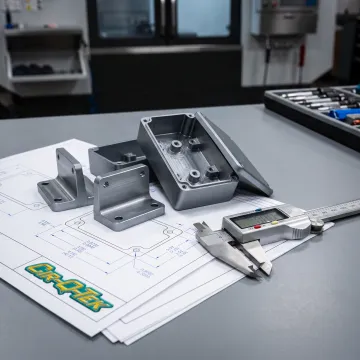
What is precision sheet metal fabrication?
Precision sheet metal fabrication is the production of metal components to defined dimensions, tolerances, and functional requirements using processes such as cutting, forming, bending, joining, and finishing. It is commonly used for brackets, panels, enclosures, frames, and assembly components. Successful projects begin with clear drawings, material specifications, critical dimensions, quantities, and any inspection or packaging requirements.
What information should I provide for a sheet metal fabrication quote?
Provide a fabrication drawing and, when available, CAD and 3D data. Include the material grade and thickness, required dimensions and tolerances, surface finish, quantity, revision level, and target delivery date. It is also helpful to identify critical fit features, cosmetic requirements, hardware needs, inspection expectations, and packaging instructions. Complete documentation helps evaluate manufacturability and prepare an accurate quote.
Can Cir-Q-Tek support prototype and production quantities?
Yes. Cir-Q-Tek’s manufacturing model is designed to support varied order quantities, from early samples and prototypes through recurring production requirements. The team can help evaluate manufacturing requirements, coordinate production, and plan fulfillment around your program. For repeat needs, parts stocking and just-in-time shipment options may help align deliveries with your production schedule and inventory strategy.
How does Cir-Q-Tek help maintain part quality?
Cir-Q-Tek emphasizes quality through certified manufacturing systems, engineering support, and inspection oversight. Its manufacturing capabilities operate in ISO 9001, ISO 13485, and IATF 16949 certified facilities, with high-end metrology equipment used for inspection of precision work. Clear drawings, defined critical features, and agreed quality requirements are essential to establishing an effective inspection plan for each program.
Which industries use precision-fabricated metal parts?
Precision-fabricated metal components are widely used in medical and healthcare devices, automotive systems, telecommunications equipment, industrial process control, electronics, gaming, product dispensing, and commercial products. Requirements vary by industry, particularly for material traceability, dimensional control, finish, documentation, and packaging. Early discussion of the end use helps ensure the manufacturing approach is suited to the application.
Can you assist with part design and manufacturability?
Cir-Q-Tek provides engineering services to assist with part design and help solve machining and manufacturing challenges. CAD design and CAM programming expertise support accurate, repeatable production planning. Sharing drawings and 3D models early allows the team to review geometry, tolerances, materials, and production considerations before release, helping identify practical opportunities to improve manufacturability.
What certifications support Cir-Q-Tek manufacturing programs?
Cir-Q-Tek’s manufacturing capabilities include ISO 9001:2015 quality management certification, ISO 13485 certification for medical device manufacturing, and IATF 16949 certification for automotive manufacturing requirements. The company also lists UL and cUL approval, ISO 14001 certification, and IPC standards for wire harness assembly. Applicable certifications should be confirmed against your specific part, process, and documentation requirements.
Can Cir-Q-Tek coordinate delivery for recurring orders?
Yes. Cir-Q-Tek can stock parts and ship them for just-in-time delivery, helping customers plan replenishment around production needs. This can reduce the burden of managing multiple overseas manufacturing communications and shipment arrangements. Delivery planning should be established during quoting or production setup, including quantities, release schedules, packaging requirements, shipping method, and destination details.