What stainless steel CNC machining services does Cir-Q-Tek provide?
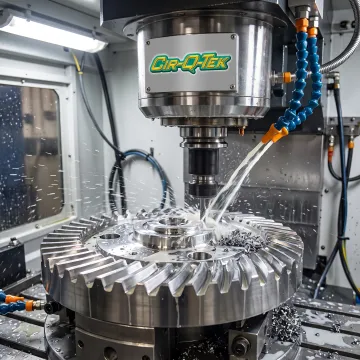
Cir-Q-Tek provides precision CNC milling and turning for stainless steel parts, including components with complex geometries, intricate features, threads, and rotational forms. Its capabilities include multi-axis and multi-tasking machinery, live tooling, multiple spindles, CAD design, and CAM programming. The team can support prototypes, small batches, and production quantities while helping address manufacturing challenges during development.
How tight can CNC machining tolerances be?
Cir-Q-Tek can maintain machining tolerances as close as ±0.0005 inches, depending on the part geometry, material condition, feature design, and inspection requirements. Tight-tolerance projects benefit from clear drawings, 3D models, critical-dimension callouts, and defined measurement criteria. High-end metrology equipment is used under strict supervision to verify finished parts against applicable specifications.
Can you machine complex stainless steel part designs?
Yes. Cir-Q-Tek uses high-performance milling and turning equipment, including multi-axis and multi-tasking machinery, to produce complex geometries and intricate features. Live tooling and multiple spindles can enable more work to be completed from a single setup, supporting accuracy while reducing unnecessary part handling. CAD design and CAM programming expertise also help evaluate manufacturability before machining begins.
What information is needed for a stainless steel machining quote?
For non-PCB and non-PCBA items, Cir-Q-Tek requests CAD and 3D data and/or fabrication drawings to prepare a quote. Helpful documentation includes material specifications, quantities, tolerances, finish requirements, critical dimensions, revision level, and delivery expectations. Complete technical data allows the machining team to assess manufacturing methods, inspection needs, and the most efficient approach for your component.
Can Cir-Q-Tek help with part design and manufacturability?
Yes. Cir-Q-Tek offers engineering support to assist with part design and solve machining and manufacturing challenges. CAD design and CAM programming capabilities help translate component requirements into practical machining plans. Early design review can identify areas where geometry, tolerances, material selection, or setup strategy may affect manufacturability, repeatability, inspection, and overall production efficiency.
What industries use your precision-machined stainless steel components?
Cir-Q-Tek serves manufacturers across medical and healthcare, automotive, telecommunications, industrial process control, gaming, product dispensing, audio and video, computer and electronics, and commercial industries. Its ISO 13485 and IATF 16949 certified manufacturing capabilities are particularly relevant for programs that require disciplined quality systems, traceable processes, and precise, repeatable component production.
Can you support both prototypes and production quantities?
Yes. Cir-Q-Tek’s precision machining services are structured to produce parts in a range of sizes, shapes, and quantities. The company supports development-stage work and can scale to production manufacturing, using engineering expertise and capable CNC equipment to maintain repeatability. Customers can also explore parts stocking and just-in-time shipping arrangements to align deliveries with planned production demand.
How is stainless steel part quality inspected?
Finished parts are inspected using high-end metrology equipment under strict supervision within ISO 9001, ISO 13485, and IATF 16949 certified facilities. Inspection requirements are guided by the approved drawings and specifications, including critical dimensions and tolerances. This structured approach helps verify that components meet the defined requirements before they move into customer inventory or production programs.