What should I look for when comparing precision CNC machining companies?
Compare machining capability, achievable tolerances, material experience, inspection methods, and quality certifications relevant to your application. For complex components, ask whether the supplier has multi-axis and multi-tasking equipment, CAD/CAM support, and the ability to finish parts in fewer setups. Also evaluate communication, quoting requirements, production flexibility, and whether the supplier can support packaging, stocking, or just-in-time delivery.
What tolerances can precision CNC machining achieve?
Achievable tolerances depend on part geometry, material, feature size, machining process, and inspection requirements. Cir-Q-Tek’s precision machining capabilities can maintain tolerances as close as ±0.0005 inches for appropriate applications. Sharing complete CAD models, fabrication drawings, critical dimensions, datum references, and inspection expectations during quoting helps determine practical tolerances and the most reliable manufacturing approach.
What materials can be CNC machined?
Precision CNC machining can be used with standard metals, high-strength and high-temperature alloys, engineered plastics, ceramics, composites, and other non-metal materials. Cir-Q-Tek also finish machines aluminum, zinc, magnesium, iron, and stainless-steel castings. Material selection should account for strength, corrosion resistance, temperature exposure, dimensional stability, finish needs, and the end-use environment.
Can Cir-Q-Tek machine prototypes and production quantities?
Yes. Cir-Q-Tek supports machining programs ranging from prototype components to repeat production requirements. This flexibility helps teams validate form, fit, and function before scaling, while maintaining a coordinated path into production. Customers should provide target quantities, forecast information, drawings, CAD and 3D data, material requirements, and any needed finishing or inspection documentation to support accurate planning.
What information is needed for a CNC machining quote?
For non-PCB and non-PCBA items, Cir-Q-Tek requests CAD and 3D data and/or fabrication drawings. Include material specifications, required quantities, critical tolerances, surface-finish requirements, thread details, inspection needs, and delivery expectations whenever available. Complete documentation enables the team to assess manufacturability, select suitable processes, identify potential machining challenges, and prepare a quote aligned with the component’s requirements.
How is quality verified for machined parts?
Quality verification begins with controlled, certified manufacturing processes and is supported by high-end metrology equipment under strict supervision. Cir-Q-Tek’s machining facilities are certified to ISO 9001, ISO 13485, and IATF 16949 standards, supporting quality management for general, medical-device, and automotive manufacturing requirements. Inspection criteria should be defined in the drawing package so critical dimensions and acceptance expectations are clearly understood.
Can you support complex multi-axis CNC components?
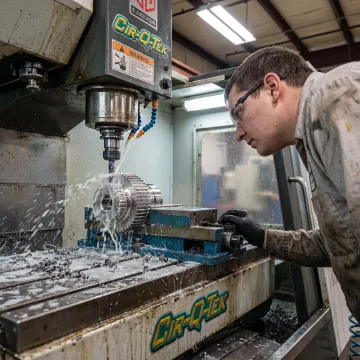
Yes. Cir-Q-Tek uses high-performance milling and turning equipment with multi-axis, multi-tasking, live-tooling, and multiple-spindle capabilities. These resources are suited to complex geometries and intricate features, including components that benefit from being completed in a single setup. Reducing setups can improve feature relationship control, minimize handling, and support repeatable production for technically demanding designs.
Does Cir-Q-Tek offer inventory or just-in-time delivery support?
Cir-Q-Tek can stock parts and ship them to support just-in-time delivery programs. This option can help customers align component releases with assembly schedules while reducing the need to manage every shipment internally. Availability planning depends on approved production quantities, stocking agreements, lead-time requirements, and shipping needs, so these details should be discussed during program planning and quoting.