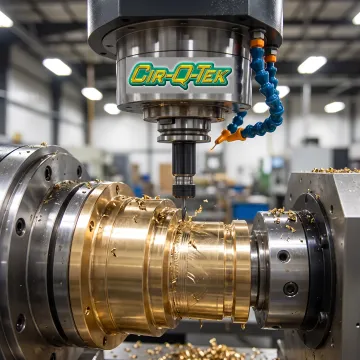
Can a CNC machine cut brass?
Yes. CNC machines cut brass effectively using milling, turning, drilling, threading, and live-tooling operations. Brass is commonly selected for precision fittings, electrical components, valves, fasteners, and decorative or functional hardware because it can produce clean details. Tool selection, spindle speeds, workholding, and inspection requirements should be matched to the specific brass grade, part geometry, tolerance, and finish requirements.
Is brass easily machinable?
Many brass grades are considered highly machinable because they cut cleanly, form chips predictably, and can achieve fine surface finishes. Actual performance varies by alloy: free-machining brasses are generally easier to process than grades selected primarily for strength, corrosion resistance, or special compliance needs. A manufacturability review helps confirm the right material, features, tolerances, and production method before machining begins.
Can you CNC machine copper?
Yes. Cir-Q-Tek’s precision machining capabilities support standard metals and alloys, including copper applications. Copper is softer and more ductile than many brass alloys, so it may require careful control of tooling, cutting parameters, workholding, and chip management to protect part surfaces and dimensions. Provide the copper grade, drawings, CAD data, quantity, tolerances, and finish requirements for an accurate manufacturing review.
What brass CNC machining operations do you offer?
Cir-Q-Tek supports precision CNC milling and turning with multi-axis, multi-tasking equipment, live tooling, and multiple spindles. These capabilities can produce complex profiles, holes, threads, turned diameters, and intricate features in fewer setups. Engineering assistance, CAD design, CAM programming, and high-end metrology inspection support projects from initial part development through repeatable production manufacturing.
What tolerances can Cir-Q-Tek hold on brass parts?
Cir-Q-Tek states that its precision CNC machining operations can maintain tolerances as close as ±0.0005 inches. Achievable tolerance depends on the part’s size, geometry, brass alloy, wall thickness, feature accessibility, and inspection method. Sharing complete CAD and 3D data and/or fabrication drawings allows the team to assess critical dimensions and establish practical, inspectable requirements before production.
What information is needed for a brass machining quote?
For non-PCB and non-PCBA items, Cir-Q-Tek requests CAD and 3D data and/or fabrication drawings. Include the brass grade if specified, required quantity, critical tolerances, threads, finish expectations, inspection needs, packaging requirements, and target delivery date. This information enables a more accurate review of manufacturability, machining approach, quality controls, and production scheduling.
Can you handle brass prototypes and production quantities?
Yes. Cir-Q-Tek’s machining capabilities are designed to support parts in any size, shape, or quantity, from early prototypes through ongoing production. Engineering support can help resolve machining and manufacturing challenges before release. For recurring programs, the company can stock completed parts and coordinate just-in-time shipments to align with customer schedules and reduce supply interruptions.
How is brass part quality inspected?
Machining is performed in ISO 9001, ISO 13485, and IATF 16949 certified facilities, with inspection using high-end metrology equipment under strict supervision. Inspection requirements can be aligned to the dimensions and features identified as critical on your drawings. This process supports dimensional verification and repeatability for brass components used in medical, automotive, industrial, and commercial applications.