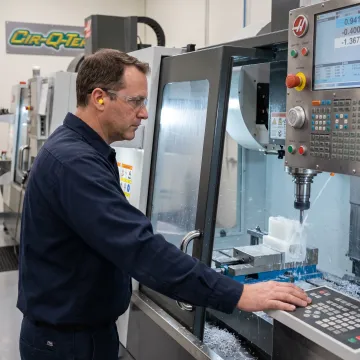
What are machined plastic parts?
Machined plastic parts are components shaped by removing material from a solid plastic stock using CNC mills, lathes, drills, and other precision equipment. This approach can create holes, threads, contours, pockets, and tight-tolerance features without tooling for a molded part. It is especially useful for prototypes, low-to-medium volumes, replacement parts, and complex designs that require precise dimensions.
What is the best plastic for CNC machining?
The best plastic depends on the part’s operating environment, mechanical requirements, and design. Common choices include acetal for low friction and dimensional stability, nylon for toughness, polycarbonate for impact resistance, and PEEK for demanding heat and chemical exposure. Material selection should also consider tolerances, moisture exposure, electrical needs, and whether the component is a prototype or production part.
How accurate is CNC plastic machining?
CNC plastic machining can produce highly accurate components when material behavior, geometry, fixturing, and inspection requirements are planned together. Cir-Q-Tek’s precision machining capabilities support tolerances as close as ±0.0005 inches for appropriate designs and materials. Final achievable tolerances depend on the plastic selected, wall thickness, feature type, part size, and environmental conditions affecting the finished component.
Can you machine prototypes and production quantities?
Yes. Cir-Q-Tek supports custom CNC machining for prototype samples as well as production manufacturing quantities. Prototype work helps validate fit, function, and manufacturability before a larger release, while production programs benefit from repeatable CAD and CAM programming. The company can also stock completed parts and coordinate just-in-time shipments to support planned manufacturing schedules.
What files are needed to request a quote?
For non-PCB and PCBA machining projects, Cir-Q-Tek requests CAD and 3D data and/or fabrication drawings. Clear drawings should identify material, quantities, dimensions, tolerances, critical features, surface requirements, and any inspection expectations. Providing this information early helps the team review manufacturability, select an efficient machining approach, and prepare a more accurate quote for your custom plastic component.
Can CNC machining create complex plastic part features?
Yes. Multi-axis and multi-tasking CNC equipment can machine complex contours, intricate features, holes, pockets, and turned details in a single setup where appropriate. Live tooling and multiple spindles expand the range of features that can be completed efficiently. Early design review is valuable for confirming tool access, wall thickness, tolerances, and the best sequence for machining critical features.
How is plastic part quality inspected?
Quality inspection begins with defined drawings, tolerances, and critical characteristics, then uses metrology equipment to verify finished dimensions and features. Cir-Q-Tek performs machining in ISO 9001, ISO 13485, and IATF 16949 certified facilities under strict supervision. Inspection requirements can be aligned with the component’s intended application, particularly for regulated medical, automotive, and industrial manufacturing programs.
Do you offer delivery and inventory support for machined parts?
Cir-Q-Tek can stock parts and ship them for just-in-time delivery, helping customers align component availability with their manufacturing schedules. This option can reduce the burden of holding excess inventory while supporting continuity for repeat orders. Delivery planning should be discussed during quoting so quantities, release schedules, packaging, and inspection requirements are coordinated before production begins.