
Box build assembly touches nearly every hardware-driven industry: medical devices, automotive, telecom, industrial controls, gaming. This guide covers what the process actually involves, how it differs from PCB assembly, and what to evaluate when choosing a manufacturing partner.
Key Takeaways
- Box build assembly integrates PCBAs, enclosures, wiring, and mechanical parts into a finished, tested product
- Requires different skills than PCBA: mechanical tolerances, cable routing, and system-level testing
- Regulated industries (medical, automotive) need partners with matching QMS certifications
- One turnkey partner reduces handoff errors between board-level and product-level manufacturing
- Low-to-medium volume OEMs typically save more outsourcing than building internal assembly capacity
What Is Box Build Assembly?
Box build assembly, sometimes called systems integration or electromechanical assembly, is the process of combining a tested PCBA with everything else a finished product needs: enclosures, wiring, mechanical hardware, firmware, and final testing.
Industry standard IPC-A-630A formally covers this category as "electronic box assemblies," and it recognizes several forms: final-system assemblies, drawers, cabinets, line-replaceable units, and housings.
Where PCB assembly stops at a populated, soldered board, box build picks up from there and adds:
- Mechanical integration (mounting boards into enclosures)
- Cable and harness routing between subassemblies
- Power supply installation
- HMI elements like buttons, displays, and indicators
- Final packaging and labeling
Core elements of any box build project include:
- Enclosure and mechanical housing
- Electronics and populated boards inside it
- Wiring and connectivity between subassemblies
- Quality control and final test
- Documentation that proves the unit meets spec

Where a PCB Box Fits In
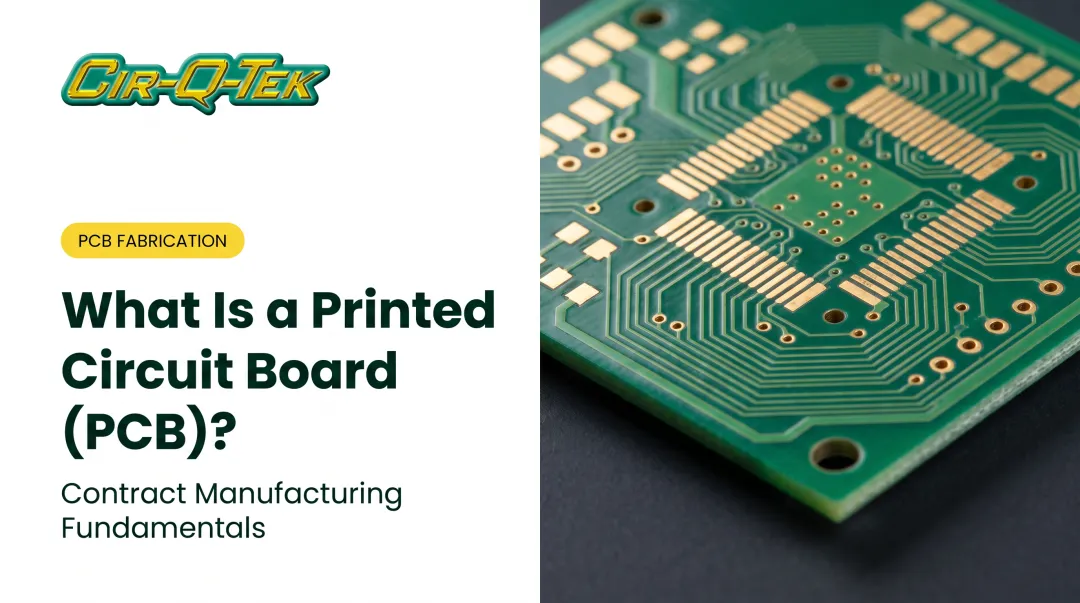
The term "PCB box" usually refers to the enclosure or housing that protects the assembled board and gives it real-world connectors, mounting points, and physical interfaces.
It is distinct from the bare PCB (unpopulated board) and the PCBA (populated board). The box is what turns either into something a technician or end user can actually handle.
Industries That Rely on Box Build
Box build shows up wherever a board needs to become a physical product:
- Medical devices — FDA Quality Management System Regulation (incorporating ISO 13485), with traceability to the finished-device level
- Automotive — IATF 16949 governs eligible manufacturing processes, including assembly and soldering
- Telecom, industrial process control, and gaming — less regulated, but still require system-level reliability
Regulated industries add layers most OEMs don't anticipate: serialized traceability, validated test protocols, and documentation that follows the unit through its entire lifecycle.
Box Build vs. PCBA Assembly: Key Differences
PCB assembly (PCBA) is board-focused work: placing components, soldering them, and testing the result. The output is a functional circuit board — nothing more.
Box build takes that board and turns it into a complete, shippable system.
| Dimension | PCBA | Box Build |
|---|---|---|
| Output | Populated, soldered PCB | Complete integrated product |
| Work involved | SMT/through-hole placement, board test | Mechanical assembly, cabling, firmware load, system test |
| Complexity drivers | Component placement accuracy | Tolerance stack-up, multi-supplier coordination, cable routing |
| Ready to ship? | Rarely; it's a subassembly | Often yes, fully labeled and packaged |
Box build adds complexity PCBA does not touch:
- Mechanical tolerances across multiple mating parts
- Coordinating components from multiple suppliers (enclosures, fasteners, cables)
- Firmware revisions that must match hardware configuration
- System-level test that checks how mechanical, electrical, and software elements behave together

Combining PCBA and box build under one provider reduces supplier handoffs, which is where defects often creep in. Every extra vendor handoff is another chance for a spec to get lost in translation. Hard numbers on lead time or defect reduction vary by program, but the qualitative pattern is consistent across the industry.
Cir-Q-Tek's turnkey path runs from PCB manufacturing through component purchasing, SMT and through-hole assembly, testing, complete box build, and packaging under one project.
The Box Build Assembly Process: Step-by-Step
Box build isn't a single fixed sequence, but most projects follow a similar arc:
- Design and planning — reviewing schematics, selecting enclosures, and providing DFM feedback before assembly starts. Catching a fastener that's impossible to access now is far cheaper than catching it during production.
- Component and material preparation — inspecting, kitting, and organizing PCBAs, cables, and mechanical hardware ahead of the build.
- Mechanical and electromechanical integration — mounting PCBs into enclosures, installing motors, sensors, or cooling elements, and accounting for thermal behavior inside a sealed housing.
- Wiring, cable harness, and system interconnection — routing, crimping, and connecting boards, power supplies, and external interfaces.
- Final assembly, labeling, and system-level testing — running functional tests, burn-in where applicable, environmental testing, and regulatory marking.
- Packaging and documentation — firmware loading, quality records, and shipment prep.

Quality control runs through every stage, not as a single end checkpoint.
Cir-Q-Tek runs inline AOI and X-ray inspection on every SMT line during the PCBA stage, then adds a secondary inspection at its Pennsylvania facility before anything ships. That checkpoint sits on top of factory-level inspection for bare PCBAs and completed box builds alike.

When Box Build Assembly Makes Sense for OEMs
Not every OEM should outsource box build, but it pays off in specific situations.
It's a strong fit when:
- Your team is focused on product innovation, not assembly-floor management
- You'd need to invest in new equipment, floor space, and trained labor to build in-house
- Production volume is low-to-medium, enough that dedicated internal capacity would sit idle between runs
- The product needs specialized capabilities: IP-rated sealing, conformal coating, multi-board interconnects, or complex calibration
An OEM building 500 units a quarter doesn't need a dedicated assembly line sitting idle the other 11 weeks of the quarter. An outsourced partner absorbs that overhead and spreads it across multiple customer programs instead.
Medical-device OEMs in particular benefit from outsourcing at the highest practical assembly level: one purchase order yielding a fully tested, ready-to-integrate module rather than managing five separate vendors for five separate subassemblies.
What OEMs Should Look for in a Box Build Manufacturing Partner
Choosing a partner is where most box build problems either get prevented or get baked in permanently. Look for:
- Manufacturing engineering support and DFM feedback — a partner who flags assembly risks during design review, not after tooling is cut
- Relevant quality certifications — ISO 9001 as a baseline, ISO 13485 for medical work, IATF 16949 for automotive
- Scalability without re-qualification — the ability to move from prototype to high-volume production with the same vendor and the same validated process
- Single-source, turnkey capability — PCB, PCBA, wire harnesses, and mechanical components under one roof
- Traceability, documentation, and on-time delivery — lot-level records plus a delivery track record you can verify
Cir-Q-Tek's dual U.S./Shenzhen structure shows how several of these criteria show up in one partner. Bristol, Pennsylvania handles domestic project management and secondary quality inspection, while the bilingual Shenzhen office runs day-to-day production communication.
OEMs get offshore manufacturing pricing without losing domestic responsiveness during a build. With ISO 9001, ISO 13485, and IATF 16949 certifications, the same partner can cover medical and automotive programs without a separate vendor for each requirement.

Common Challenges in Box Build Assembly
Even well-run box build programs run into predictable friction points:
- Design-manufacturing disconnects. Unreachable fasteners, cable routes that don't fit, and tolerance stack-ups that only appear with real parts. Catching these in DFM review, before tooling, costs far less than a mid-production redesign.
- System-level testing complexity. Defects often come from interactions between mechanics, electronics, and software, not from one component failing alone. Plan testability for the full system, not just the board.
- Multi-supplier coordination. Enclosures, mechanical parts, and packaging often come from different suppliers, and each adds a logistics dependency. A partner who manages that coordination internally removes several delay points.
None of these challenges are unusual. They're the tradeoff for building a complete product instead of a single component, and a strong turnkey partner is built to absorb them.
Frequently Asked Questions
What is the PCB assembly process?
PCB assembly (PCBA) is the process of soldering and testing electronic components onto a bare circuit board. It produces a functional board, not a finished, housed product.
What is a box build assembly?
Box build assembly integrates a tested PCBA with enclosures, wiring, and mechanical parts to create a complete, finished product. It includes system-level testing before shipment.
What are the key differences between box build and PCBA assembly?
PCBA focuses solely on the board: placement, soldering, and board-level testing. Box build adds mechanical integration, cabling, and system testing to produce a complete, shippable system.
What is a PCB box?
A PCB box typically refers to the enclosure or housing used in box build assembly. It protects the PCBA and provides the physical interfaces users interact with.
How long does box build assembly typically take?
Timelines vary with complexity, order volume, and material availability. Simple builds move faster; multi-board systems with calibration take longer. Only a project-specific quote gives a reliable timeline.
Do OEMs need separate vendors for PCBA and box build?
No. A single turnkey partner reduces handoff errors, simplifies documentation, and cuts the coordination burden of managing multiple suppliers for one product.