How much does it cost to have a part machined?
The cost of machining a part is driven by material, dimensions, tolerance requirements, geometry, finishing, setup time, and order quantity. Complex multi-axis features or specialty alloys generally require more programming and machine time. To prepare an accurate quote, Cir-Q-Tek requests CAD and 3D data and/or fabrication drawings for non-PCB and non-PCBA items. Larger production volumes can reduce the cost per part by spreading setup costs across more units.
What files are needed for a CNC machining quote?
For non-PCB and non-PCBA machining quotes, provide CAD and 3D data and/or fabrication drawings. Drawings should identify critical dimensions, tolerances, material specifications, finishes, thread details, and any inspection requirements. Clear documentation allows the engineering team to evaluate manufacturability, select an appropriate machining approach, and quote the part accurately. Include the expected quantity and delivery requirements so production planning can be considered as well.
What materials can Cir-Q-Tek machine?
Cir-Q-Tek can machine almost any material, including standard metals, high-strength and high-temperature metals and alloys, engineered plastics, ceramics, composites, and other non-metals. The team also has finish-machining expertise for aluminum, zinc, magnesium, iron, and stainless steel castings. Material selection should account for the part’s mechanical performance, operating environment, weight, corrosion resistance, and dimensional tolerance requirements.
How tight can CNC machining tolerances be?
Cir-Q-Tek’s precision machining capabilities can maintain tolerances as close as ±0.0005 inches, depending on the part geometry, material, feature location, and inspection requirements. Not every feature needs the tightest tolerance, and applying close tolerances only where function requires them can help control cost. High-end metrology equipment is used under strict supervision to verify finished parts against specified requirements.
Can you machine prototypes as well as production parts?
Yes. Cir-Q-Tek supports parts in any size, shape, or quantity, making the service suitable for prototype validation, bridge production, and ongoing manufacturing programs. Prototype work can help confirm fit, function, material performance, and manufacturability before a larger release. Once the design is approved, the same CAD/CAM knowledge and controlled machining processes support repeatable production output.
What CNC machining processes do you offer?
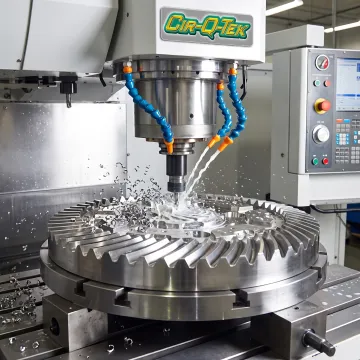
Cir-Q-Tek provides precision CNC milling and turning using high-performance, multi-axis, multi-tasking machinery. Capabilities include live tooling and multiple spindles, which can enable finished parts to be produced from a single setup. This equipment configuration supports intricate features, complex geometries, and efficient production of parts that require both turning and milling operations.
How do you verify the quality of machined parts?
Machined parts are produced in ISO 9001, ISO 13485, and IATF 16949 certified facilities and inspected with high-end metrology equipment under strict supervision. These controls support consistent dimensional verification and process discipline for demanding applications. Cir-Q-Tek’s certified manufacturing network is particularly relevant for customers serving regulated medical and automotive markets with defined quality and traceability expectations.
Can Cir-Q-Tek stock and ship machined parts as needed?
Yes. Cir-Q-Tek can stock parts and ship them for just-in-time delivery, helping customers align component availability with their production schedules. This option can reduce internal inventory handling and provide a more organized supply flow for recurring parts. Discuss forecast volumes, packaging needs, release schedules, and shipping destinations during quoting so the stocking approach can be planned appropriately.