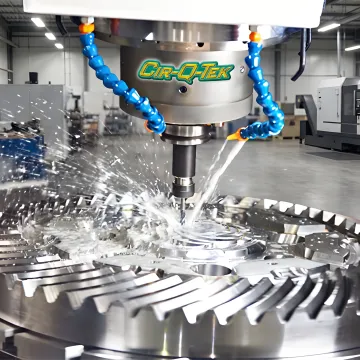
How much does it cost to get a part CNC machined?
CNC machining cost is driven by material, part size, geometry, tolerance requirements, finishing, quantity, and required setup time. Features such as deep pockets, tight tolerances, special tooling, or multiple setups can increase cost. Cir-Q-Tek provides quotes based on your CAD and 3D data and/or fabrication drawings, allowing the manufacturing approach and pricing to be matched to your exact part requirements.
What tolerances can Cir-Q-Tek hold for CNC-machined parts?
Cir-Q-Tek can maintain machining tolerances as close as ±0.0005 inches, depending on the part’s geometry, material, dimensions, and feature requirements. Tolerance feasibility should be reviewed during quoting because certain designs may require specialized processes or inspection plans. High-end metrology equipment and supervised inspection processes are used to verify that finished components meet the agreed specifications.
What materials can be CNC machined?
Cir-Q-Tek machines almost any material, including standard metals, high-strength and high-temperature alloys, engineered plastics, ceramics, composites, and other non-metals. The team also has finish-machining expertise for aluminum, zinc, magnesium, iron, and stainless-steel castings. Material selection should account for strength, heat resistance, corrosion resistance, weight, machinability, and the part’s intended operating environment.
Do you handle CNC prototypes and production quantities?
Yes. Cir-Q-Tek supports small prototype orders as well as ongoing production manufacturing. Prototype machining helps validate form, fit, function, and manufacturability before larger commitments, while production programs can benefit from repeatable CAD/CAM processes, inspection controls, parts stocking, and just-in-time shipment options. The appropriate approach is determined by your quantity, timing, and application requirements.
What files are needed to request a CNC machining quote?
For non-PCB and non-PCBA machining items, Cir-Q-Tek requests CAD and 3D data and/or fabrication drawings. Clear drawings should identify material, dimensions, tolerances, surface finish, thread specifications, critical features, and any inspection or certification requirements. Providing expected quantities and delivery needs also helps the team select an efficient manufacturing route and prepare an accurate quote.
Can complex parts be machined in one setup?
Many complex components can be produced using Cir-Q-Tek’s multi-axis, multi-tasking, live-tooling, and multiple-spindle CNC equipment. Completing more features in one setup can reduce handling, improve positional consistency, and shorten production steps. The best setup strategy depends on the part geometry, material, tolerance requirements, and accessibility of each feature, so designs are reviewed before manufacturing.
How is quality verified for CNC-machined parts?
Quality is supported by ISO 9001, ISO 13485, and IATF 16949 certified facilities, strict supervision, and high-end metrology inspection equipment. Inspection requirements are aligned with the part drawing and application, with particular attention to critical dimensions, tolerances, and features. These controls are especially valuable for medical, automotive, industrial, and other programs where consistent documentation and repeatability matter.
Can Cir-Q-Tek stock parts for scheduled delivery?
Yes. Cir-Q-Tek can stock finished parts and ship them for just-in-time delivery based on customer schedules. This option can help reduce on-site inventory pressure while supporting planned production demand. Stocking arrangements should be established during program planning, including release schedules, packaging needs, storage expectations, shipment destinations, and the quantity of inventory to be maintained.