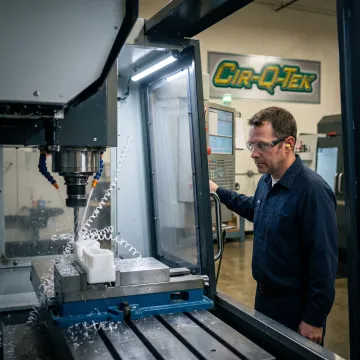
Can plastic be CNC machined?
Yes. Many plastics can be CNC machined into accurate parts using milling, turning, drilling, and finishing operations. Machining is especially useful when a component needs tight dimensions, complex features, or a prototype quickly without dedicated tooling. Material selection, part geometry, fixturing, heat management, and suitable cutting parameters are important for minimizing stress, distortion, and surface damage.
What is the strongest machinable plastic?
PEEK is widely regarded as one of the strongest and most capable machinable engineering plastics because it combines high strength, heat resistance, chemical resistance, and dimensional stability. The right choice still depends on the application. Acetal, nylon, polycarbonate, UHMW, and filled engineering plastics may be better suited for wear, impact, electrical insulation, moisture exposure, or cost requirements.
What plastic components can be CNC machined?
CNC machining can produce housings, brackets, bushings, gears, manifolds, insulators, fixtures, medical-device components, and other custom parts. Multi-axis milling supports pockets, contours, holes, and intricate profiles, while CNC turning is effective for round, threaded, and rotational designs. Cir-Q-Tek can review drawings to determine the most practical machining approach for required features and quantities.
How accurate is CNC plastic machining?
Achievable accuracy depends on the material, geometry, wall thickness, and environmental requirements. Cir-Q-Tek’s precision machining capabilities can maintain tolerances as close as ±0.0005 inches on suitable features. Because plastics can expand, absorb moisture, or move during machining, tolerance planning should account for the selected resin, part design, inspection requirements, and the component’s intended operating conditions.
What files are needed for a CNC plastic machining quote?
For non-PCB and PCBA machining quotes, provide CAD and 3D data and/or fabrication drawings. Include material specifications, quantities, dimensions and tolerances, thread details, finish requirements, critical inspection points, and requested delivery timing. Clear documentation helps the engineering team evaluate manufacturability, identify any design considerations, and prepare a more accurate quote for your plastic parts.
Can you machine prototypes and production quantities?
Yes. Cir-Q-Tek supports a range of order quantities, from early prototype parts used for fit and functional testing through repeat production requirements. CAD/CAM programming, multi-axis equipment, inspection resources, and parts-stocking options help create a practical path from development to ongoing fulfillment while maintaining consistent manufacturing controls.
How do you inspect machined plastic parts?
Inspection is performed using high-end metrology equipment under strict supervision within certified manufacturing facilities. Inspection planning can focus on the dimensions and features that are most critical to fit, function, and assembly. Providing drawings with clearly identified tolerances and critical characteristics allows the team to align measurement and verification activities with your component requirements.
Can Cir-Q-Tek stock and ship machined plastic parts?
Yes. Cir-Q-Tek can stock parts and ship them using just-in-time delivery arrangements that align with customer schedules. This approach can reduce the need to hold all inventory at your facility while helping support planned assembly or production demand. Discuss expected volumes, release schedules, packaging needs, and delivery requirements during the quoting and planning process.