What is prototype machining?
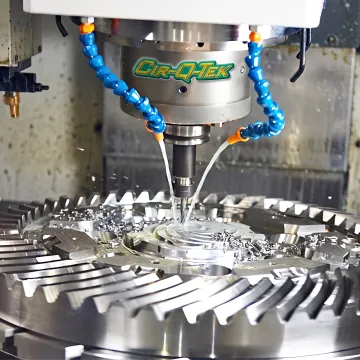
Prototype machining is the use of CNC equipment to make early-stage, custom parts directly from CAD models or fabrication drawings. It is often used to evaluate fit, function, materials, tolerances, and assembly before a production run. CNC milling and turning can create prototypes from many metals, alloys, engineered plastics, ceramics, composites, and other non-metal materials.
How much does it cost to get something machined?
Machining cost is determined by part geometry, material, tolerances, quantity, required finishes, inspection needs, and the number of machine setups. Complex features or extremely tight tolerances generally require more programming and machining time. Cir-Q-Tek prepares quotes from CAD and 3D data and/or fabrication drawings for non-PCB items, so the manufacturing approach can be evaluated accurately.
Who can help me make a prototype?
Cir-Q-Tek can support prototype development with engineering assistance, CAD design, CAM programming, precision CNC machining, and inspection. The team works with customer-supplied part data to address machining and manufacturing challenges, then coordinates the production of custom parts. This approach is suited to companies that need a manufacturing partner from design review through delivery and later production planning.
What CNC prototype machining capabilities does Cir-Q-Tek offer?
Cir-Q-Tek offers precision-class CNC machining using high-performance milling and turning equipment, multi-axis machinery, multi-tasking machines, live tooling, and multiple spindles. These capabilities support complex geometries and intricate features, including finished parts that can be completed from a single setup. CAD design and CAM programming expertise help maintain accuracy and repeatability throughout the prototype process.
How tight can prototype machining tolerances be?
Cir-Q-Tek can maintain machining tolerances as close as ±0.0005 inches, depending on the part design, material, feature accessibility, and inspection requirements. Tolerances should be clearly identified on the drawing or CAD package so the appropriate process and metrology plan can be selected. Specifying only the tolerances essential to function can also help control prototype cost and lead time.
What materials can be used for custom CNC prototype parts?
CNC prototype machining can accommodate almost any material, including standard-grade metals, high-strength and high-temperature metals and alloys, engineered plastics, ceramics, composites, and other non-metals. Cir-Q-Tek also finish-machines aluminum, zinc, magnesium, iron, and stainless-steel castings. Material selection should reflect the prototype’s functional testing, environmental exposure, strength, thermal, and finish requirements.
What files do I need for a CNC machining quote?
For non-PCB and non-PCBA machining projects, Cir-Q-Tek requests CAD and 3D data and/or fabrication drawings. Include material specifications, quantities, critical dimensions, tolerance callouts, thread details, surface-finish requirements, and any inspection criteria. Complete data enables a more accurate review of manufacturability, tooling, setup needs, and pricing before work begins.
Can Cir-Q-Tek support production after prototype approval?
Yes. Cir-Q-Tek supports both small prototype orders and larger production requirements as part of its broader integrated manufacturing model. Its machining capabilities, quality systems, parts-stocking options, and just-in-time delivery support can help transition an approved part toward recurring fulfillment. The company also provides related services such as PCB, assembly, wire harness, die casting, and injection molding solutions.