
One of the most common ways teams solve this is by handing a finished, validated design to a contract manufacturer and letting them build it exactly as specified. That's build to print (BTP), and it's a different animal than asking a supplier to help design something from scratch.
This guide covers what BTP actually means, how it differs from build-to-spec and design-build arrangements, and what to look for in a manufacturing partner. Cir-Q-Tek's dual U.S./China operation, with ISO-certified facilities in Bristol, Pennsylvania and Shenzhen, China, offers a useful lens for seeing how this works in practice.
Key Takeaways
- Build to print means you supply finished drawings, BOMs, and tolerances—the manufacturer builds exactly to your design
- Choose BTP to keep design ownership; choose build-to-spec (BTS) when you want the manufacturer to help develop the design
- You gain cost efficiency, faster time-to-market, and full IP control when drawings and specs are complete and accurate
- DFM feedback plus certified quality systems (e.g., ISO 9001, ISO 13485) still cut risk in strict BTP work
What Is Build to Print Manufacturing?
Build to print manufacturing means the client provides a complete, finalized technical package, and the manufacturer produces exactly to that package. No design input required. No design input wanted, in most cases.
Under the eCFR's defense-trade definition, BTP production happens "without technical assistance from the design owner," using only the supporting documentation needed to make an acceptable part. Design methodology, engineering analysis, and manufacturing know-how stay outside the package. The client retains design ownership and the intellectual property that comes with it.
The typical BTP documentation package includes:
- Finalized CAD files and technical drawings
- A complete bill of materials (BOM)
- Material specifications and finish requirements
- Tolerances and dimensional callouts
- Quality and inspection acceptance criteria

BTP shows up constantly in a handful of product categories:
- Replacement parts for existing equipment
- PCBs and PCBAs built from released Gerber files
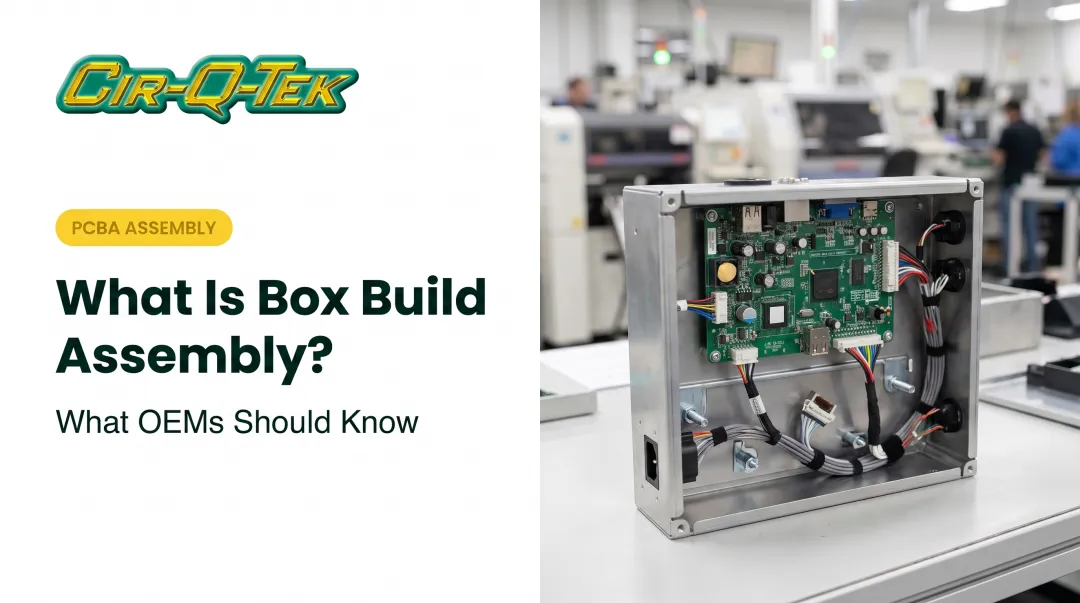
- Wire harnesses built to approved schematics
- Precision-machined or die-cast components with a validated design
Why Certifications Matter for Regulated BTP Work
Not every manufacturer can legally take on BTP work in regulated industries. Match the cert to the work:
- ISO 9001 — Voluntary baseline quality management certification
- ISO 13485 — Required scope for medical-device production
- IATF 16949 — Limited to organizations making actual automotive parts or vehicles, not service-only or inspection work
If you're outsourcing a medical component or an automotive part, the certificate needs to match the facility and the actual process being quoted, not just the parent company's letterhead.
Cir-Q-Tek's Approach to Build to Print
North American EMS shipments rose 1.7% year-over-year in February 2025, though year-to-date shipments were down slightly and bookings dipped 3.6%. It's a mixed but active market for outsourced electronics manufacturing—not a runaway boom.
Cir-Q-Tek runs BTP programs through a dual-office structure: Bristol, Pennsylvania handles domestic quality oversight and client coordination, while the Shenzhen office manages offshore production with bilingual staff fluent in English and Chinese. That combination gives clients offshore pricing without losing a domestic point of contact.
On the execution side, Cir-Q-Tek's capabilities support BTP orders directly:
- SMT lines with inline AOI and X-ray inspection for automated defect catching
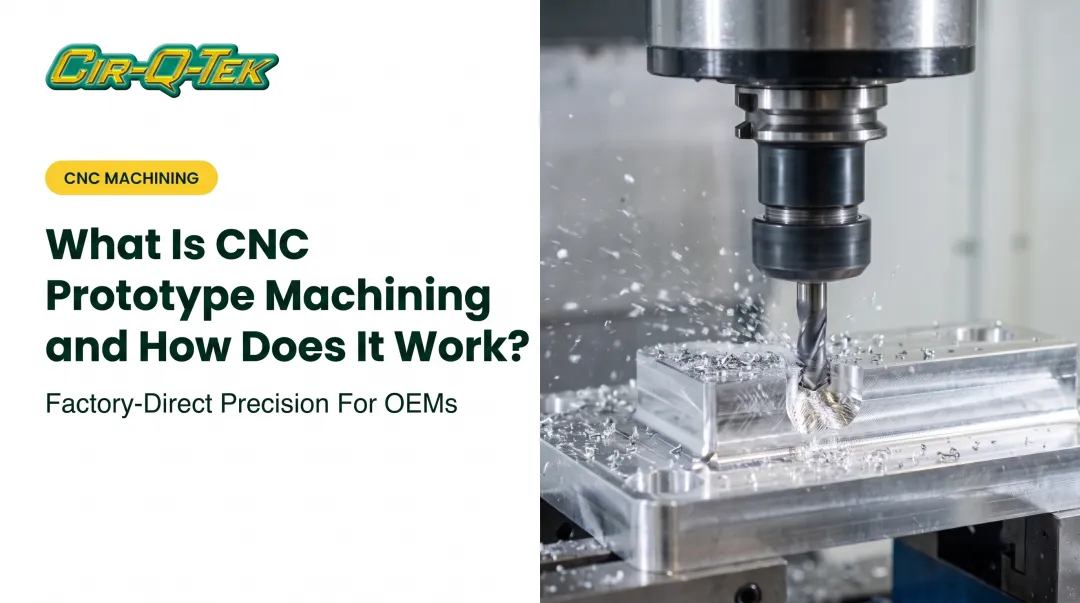
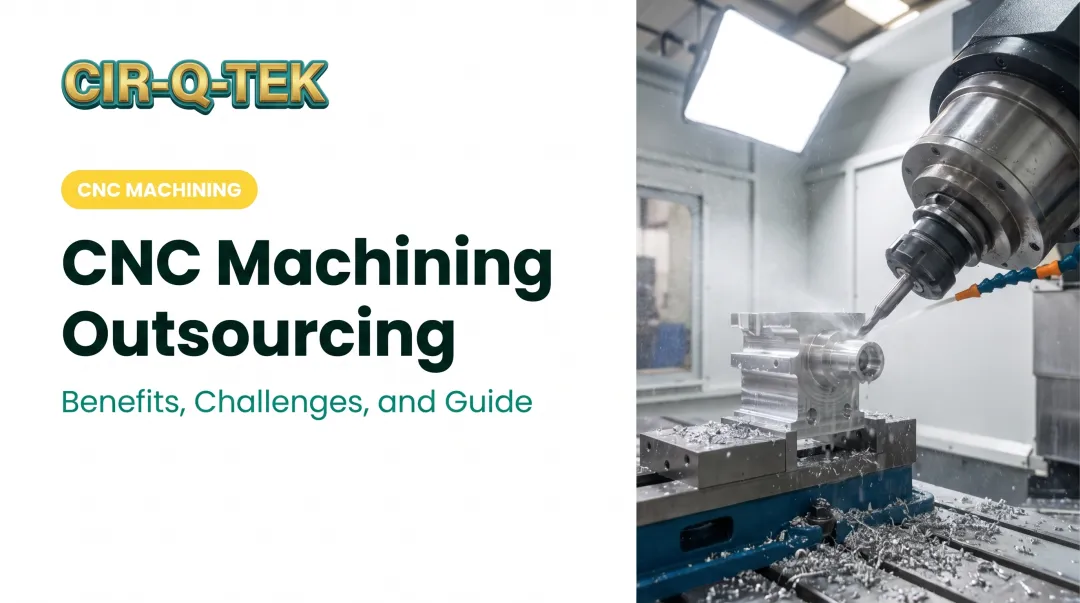
- CNC machining tolerances as tight as ±0.0005 inch
- Handling for fine-pitch components like 01005 parts, BGAs at 0.2mm spacing, QFN, and CSP packages

For PCB and PCBA quotes specifically, the required package is a Gerber or ODB file plus a BOM. For other manufactured parts, clients need to supply CAD/3D data and fabrication drawings.
Build to Print vs. Build to Specification (BTS) vs. Design-Build
BTP isn't the only outsourcing model, and confusing it with the alternatives leads to bad contracts.
Build-to-spec (BTS) flips the design relationship. Instead of a finished drawing, the client hands over functional or performance requirements, and the manufacturer develops the design to meet them.
Design-build goes further. Design responsibility is shared between client and supplier throughout the project.
| Factor | Build to Print | Build-to-Spec | Design-Build |
|---|---|---|---|
| Design ownership | Client, fully | Client sets requirements; supplier designs | Shared |
| Supplier design input | None expected | Significant | Significant |
| IP control | Stays with client | Often negotiated | Often shared/negotiated |
| Best fit | Finalized, validated designs | Early-stage products needing engineering | New product development |

Think of aerospace turbine blades or a released PCB layout as classic BTP work. The design is locked; the manufacturer's job is precision execution.
A startup with a rough concept for a new sensor housing needs build-to-spec or design-build—there's no finished drawing to hand off yet.
Picking the wrong model creates friction fast. Send an incomplete design to a BTP-only manufacturer, and production stalls while gaps get resolved. Send a fully validated design to a design-heavy shop, and you waste engineering hours and money on work the design doesn't need.
How the Build to Print Process Works
A BTP engagement moves through a predictable sequence, though the details vary by product type.
- Documentation handoff — client submits drawings, BOM, tolerances, and inspection criteria
- RFQ and supplier selection — manufacturer reviews the package and quotes based on process capability and capacity
- Contract agreement — parties lock in terms, delivery schedule, and quality expectations
- Manufacturing — production runs per the released documentation
- Quality assurance — incoming inspection, in-process checks, final testing
- Delivery — shipment, often with import/export and logistics support bundled in

The single biggest determinant of BTP success is documentation quality. A manufacturer executing to spec can only be as accurate as the print it's given. Outdated drawings, obsolete BOM components, and ambiguous tolerances are the most common failure points. They usually surface late in inspection, when fixes are expensive.
Component obsolescence is a growing risk. Z2Data tracked nearly 474,000 parts reaching end-of-life in 2023 alone, following an even higher count in 2022. A BOM that was accurate a year ago might now specify a part that no longer exists.
Quality Assurance Stages Catch Problems Early
Even with clean documentation, layered quality gates keep the build on track:
- Incoming inspection verifies materials match the spec before production starts
- In-process checks (inline AOI and X-ray for PCBA) catch defects mid-run
- Final testing confirms the finished product against the original documentation before shipment
Cir-Q-Tek addresses documentation risk with engineering support during quoting and a secondary quality inspection at its Pennsylvania facility before parts ship to the customer, adding a domestic check on top of offshore production.
Benefits and Challenges of Build to Print Manufacturing
BTP earns its popularity because the tradeoffs are usually favorable for companies with a validated design.
Core benefits:
- Lower production costs by tapping specialized equipment without capital investment
- Faster time-to-market since there's no design-development cycle to wait through
- Full IP control, since the design never leaves the client's ownership
- Access to expertise (like fine-pitch SMT placement or tight-tolerance CNC work) without hiring for it in-house
Sierra Circuits reported turning around prototype PCB assembly in 24 hours, versus up to a week when the client attempted it internally. That's a single case study, not an industry-wide benchmark. It still shows the time compression BTP can deliver when documentation is solid and the manufacturer already has the right equipment.
Key challenges:
- Incomplete or outdated documentation stalls production or causes rework
- Not every supplier has the process capability the print actually requires
- Communication barriers, especially across borders, slow down issue resolution
Those risks stay manageable when prints are complete and you work with a partner that has proven process capability and clear communication channels.
What Is DFM and Why It Matters in Build to Print
Design for Manufacturability, or DFM, is the practice of reviewing a design's producibility before committing it to full production. It sounds like it contradicts BTP's whole premise. If the manufacturer isn't supposed to touch the design, why would DFM matter?
Because DFM feedback doesn't have to mean redesigning anything. A manufacturer can flag:
- Material substitutions that improve manufacturability without changing form or function
- Tolerances tighter than necessary that drive up cost
- Component footprints that are difficult to place reliably on an SMT line
None of that changes the design intent. It catches issues before they become expensive problems.
The cost math backs this up. Siemens' rule of thumb for PCB issues is that fix costs rise roughly tenfold at each stage, from development to testing to full production. A tolerance flagged during quoting is cheap to fix. The same issue caught during final inspection means scrapped parts and a blown schedule.

Even in the strictest BTP contract, a manufacturer that flags issues without unilaterally changing anything is protecting the client's timeline and budget.
Choosing the Right Build to Print Manufacturing Partner
Not every contract manufacturer that claims to do BTP work is equipped to do it well. A few things separate a reliable partner from a risky one.
What to check before signing:
- Relevant certifications — ISO 9001 as a baseline, plus ISO 13485 (medical) or IATF 16949 (automotive), matched to the facility doing the work
- Process breadth — PCB/PCBA, CNC machining, and related capabilities under one roof reduce the number of vendors you have to manage
- Quality systems — documented inspection stages, not just a claim of "high quality"
- Delivery track record — ask for specifics, not just marketing language
- Defect handling policy — what happens when a part doesn't conform to spec
A true one-stop partner covering multiple process types cuts down on vendor management overhead and shortens lead times, since you're not coordinating handoffs between three or four separate suppliers for one assembly.
Cir-Q-Tek, for example, brings 26 years of operating history and certifications spanning ISO 9001, ISO 13485, and IATF 16949. Its defect-replacement policy covers parts that don't conform to the customer's fabrication information, at no additional cost.
Stated PCB lead times run three days to build plus two days to ship for prototypes, and 10 days to four weeks for production runs—a concrete benchmark buyers can plan against.
Other established BTP-capable manufacturers in the space, including firms like Modus Advanced and various EMS providers audited to IPC standards, offer similar process breadth. The right fit depends on which certifications and processes match your specific part.
Frequently Asked Questions
What does build to print mean in manufacturing?
Build to print means the client supplies complete, finished specifications and drawings, and the manufacturer builds the product exactly to that documentation. The client retains full design ownership throughout.
What is the difference between build-to-print (BTP) and build-to-spec (BTS)?
BTP starts with a finished design that the manufacturer executes without changes. BTS starts with functional or performance requirements, and the manufacturer develops the actual design to meet them.
What does build-to-spec (build to specification) mean?
Build-to-spec means the supplier designs and builds a product based on the client's functional or performance requirements, rather than working from a finished drawing. Design responsibility sits largely with the manufacturer.
What is DFM in manufacturing?
DFM, or Design for Manufacturability, is the practice of reviewing a design's producibility before committing it to full production. It catches costly issues like difficult tolerances or hard-to-source materials early.
How detailed must specifications be for build to print manufacturing?
Specifications need complete drawings, a full bill of materials, defined tolerances, material specs, and inspection or acceptance criteria. Gaps in any of these are the leading cause of BTP delays and rework.
What industries commonly use build to print manufacturing?
Medical device, automotive, aerospace, telecom, and electronics industries rely heavily on BTP, particularly for validated designs like replacement parts, PCBs, and precision-machined components.