Picking the wrong partner costs more than money. It costs launch dates, warranty claims, and sometimes a customer relationship you can't get back. OEMs sourcing globally need to weigh production speed, quality systems, and total landed cost together, not one at a time.
The global PCBA market hit $39.45 billion in 2024, according to Market Research Future, and it's still climbing. This guide ranks the ten manufacturers shaping that growth.
TL;DR
- US, Asian, and hybrid domestic-offshore PCBA partners fit different volume, lead-time, and compliance needs
- ISO 9001, ISO 13485, and IATF 16949 certifications help separate reliable partners from risky ones
- Rankings here weigh manufacturing scale, technology depth, and proven industry trust
- Hybrid models that pair domestic service with offshore pricing are gaining ground on pure-EMS giants
Overview of PCB Assembly in the Global Electronics Manufacturing Industry
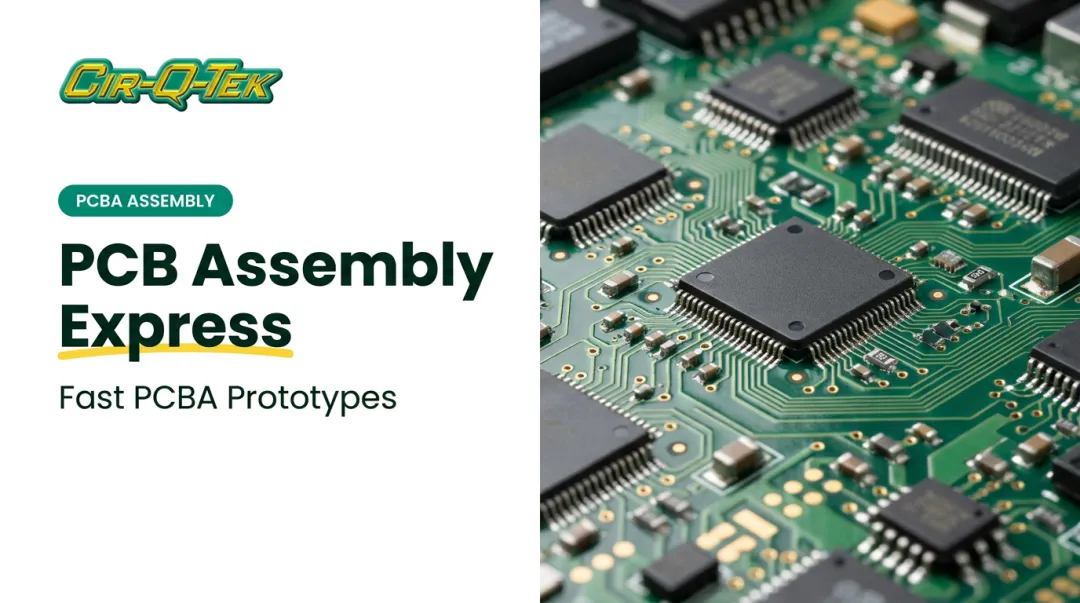
PCB assembly, or PCBA, is the process of populating a bare printed circuit board with electronic components using surface-mount technology (SMT) or through-hole technology (THT). Without it, a bare board is just fiberglass and copper traces. It can't power anything.
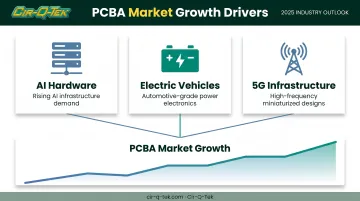
IndustryARC projects the PCBA market will reach $84.864 billion by 2030, growing at a 5.10% CAGR from 2024 to 2030. Three forces are driving that growth:
- AI hardware: server demand tied to AI infrastructure is expanding rapidly, pushing PCBA capacity investment
- Electric vehicles: EV battery management and power electronics require automotive-grade assembly
- 5G infrastructure: high-frequency, miniaturized designs demand tighter tolerances and denser boards
Manufacturers meeting this demand fall into three categories: US-based EMS providers, Asian contract giants, and hybrid domestic-offshore models. The ranking below covers all three, weighing scale, certifications, and technical capability.
Top 10 PCB Assembly Manufacturers in the World
Selection criteria for this list include certifications, manufacturing scale, technological capability, industry diversity, and demonstrated customer trust.
Cir-Q-Tek
Founded in 1999 and headquartered in Bristol, Pennsylvania, Cir-Q-Tek runs an integrated Shenzhen office that lets it serve medical, automotive, telecom, and industrial clients without the usual offshore communication headaches.
The company is ISO 9001, ISO 13485, and IATF 16949 certified, covering general quality, medical device, and automotive requirements in one shop.
Prototype boards ship fast: 3 days to build, 2 days to ship. Every SMT line runs inline AOI and X-ray inspection, and the equipment handles 01005 passives and BGA components spaced as tight as 0.2mm.
| Category | Details |
|---|---|
| Manufacturing Scale & Capabilities | Up to 40-layer multilayer PCBs, laser direct imaging, turnkey PCBA, and precision CNC machining under one roof |
| Industries Served | Medical, automotive, telecom, industrial process control, gaming, commercial electronics |
| Key Differentiator | Domestic US service quality at offshore China pricing through a bilingual dual-office model |
Foxconn Industrial Internet (Hon Hai Precision Industry)
Headquartered in New Taipei City, Taiwan, Foxconn runs assembly campuses across China at a scale no competitor matches. Reuters calls it the world's largest contract electronics maker, and the numbers back that up.
The company reported 648,492 employees and operations spanning more than 200 sites in over 20 countries, with FY2025 consolidated revenue of NT$8.1 trillion.
| Category | Details |
|---|---|
| Manufacturing Scale & Capabilities | Over 200 global facilities, deep vertical integration from components to finished assembly |
| Industries Served | Consumer electronics, computing, telecom |
| Key Differentiator | Extreme high-volume capacity paired with end-to-end vertical integration |
Jabil Inc.
Jabil, a Fortune 500 EMS provider founded in 1966, runs more than 100 facilities across 25-plus countries. FY2025 net revenue reached $29.8 billion.
Jabil pairs design engineering with automated SMT and BGA assembly lines, letting customers move from concept to production without switching partners.
| Category | Details |
|---|---|
| Manufacturing Scale & Capabilities | Global multi-site operations with automated PCBA lines |
| Industries Served | Consumer electronics, automotive, healthcare, aerospace |
| Key Differentiator | Scale combined with integrated supply chain and design support |
Flex Ltd.
Founded in 1969 and headquartered in Austin, Texas, Flex specializes in large and complex board assembly. Its published PCBA capability supports 91mm x 91mm BGAs and 98mm x 98mm CPU sockets.
Flex uses a proprietary assembly process built to reduce head-in-pillow and non-wet-open defects on oversized components, a common failure point in dense boards.
| Category | Details |
|---|---|
| Manufacturing Scale & Capabilities | Support for large-format BGAs and CPU sockets, system-in-package integration |
| Industries Served | Data centers, automotive, healthcare, lifestyle electronics |
| Key Differentiator | Defect-reduction assembly process tuned for oversized components |
Sanmina Corporation
Sanmina was founded in Silicon Valley in 1980 and is now headquartered in San Jose, California. It specializes in high-reliability systems for regulated industries.
Its PCB fabrication capability exceeds 70 layers with aspect ratios up to 35:1. Facility-level documentation shows IPC-A-610 Class 2 and Class 3 assembly capability, though this varies by site rather than applying company-wide.
| Category | Details |
|---|---|
| Manufacturing Scale & Capabilities | 70+ layer fabrication, HDI, any-layer, high aspect-ratio drilling |
| Industries Served | Defense, medical imaging, optical networking |
| Key Differentiator | Vertically integrated model reducing reliance on third-party suppliers |
TTM Technologies
TTM, founded in 1998 and headquartered in Santa Ana, California, ranks among North America's largest technology manufacturers according to its own SEC filings.
Its HDI process supports microvias no larger than 0.15mm and line width/spacing under 0.075mm, tight enough for advanced RF and 5G designs.
| Category | Details |
|---|---|
| Manufacturing Scale & Capabilities | Sub-0.15mm microvias, RF module manufacturing, tight trace/space tolerances |
| Industries Served | 5G infrastructure, aerospace/defense, data centers |
| Key Differentiator | Trusted aerospace and defense supplier with U.S. government subcontracting history |
Celestica Inc.
Celestica, headquartered in Toronto, Ontario, reports roughly 8 million square feet of operating capacity spread across 15 countries, including Canada, China, India, and Mexico.
The company splits its focus between communications/enterprise (data-center networking, optical products, servers) and advanced technology (aerospace, industrial, HealthTech, semiconductor capital equipment).
| Category | Details |
|---|---|
| Manufacturing Scale & Capabilities | 8M sq ft of capacity across 15 countries |
| Industries Served | Communications, enterprise computing, aerospace, industrial |
| Key Differentiator | Deep expertise in complex, low-to-mid-volume high-reliability programs |
Wistron Corporation
Wistron spun off from Acer in 2001 and is headquartered in Taipei, Taiwan. It leans heavily on decades of laptop and server assembly experience.
Its 2025 annual report cites global production shares of 18% notebooks, 24% desktops, and 22% servers. That mix shows a company still anchored in computing hardware even as AI servers grow within it.
| Category | Details |
|---|---|
| Manufacturing Scale & Capabilities | Large-scale computing and server production across Asia |
| Industries Served | Computing, servers, networking equipment |
| Key Differentiator | Deep OEM/ODM relationships with major computing brands |
Pegatron Corporation
Pegatron, headquartered in Taipei, posted FY2025 consolidated revenue of NT$1.1172 trillion. Notebook production alone reached 9.1 million units, nearly 5% of global volume.
Beyond notebooks, Pegatron's networking division develops Wi-Fi 8, 5G O-RAN, and AI switching hardware, signaling a push beyond pure consumer assembly.
| Category | Details |
|---|---|
| Manufacturing Scale & Capabilities | High-volume smartphone and networking assembly across Asian facilities |
| Industries Served | Smartphones, networking, consumer electronics |
| Key Differentiator | Rapid scalability for high-volume consumer product launches |
Benchmark Electronics
Benchmark, founded in 1979 and headquartered in Tempe, Arizona, focuses on complex electronics for regulated industries rather than chasing consumer volume.
Its Q2 2025 results reaffirmed its position across medical, aerospace and defense, semiconductor capital equipment, and industrial markets, where reliability matters more than unit cost.
| Category | Details |
|---|---|
| Manufacturing Scale & Capabilities | Multilayer complex board assembly with BGA, COB, MCM packaging |
| Industries Served | Medical devices, aerospace, semiconductor equipment |
| Key Differentiator | Full lifecycle partnership from design through aftermarket support |
How We Chose the Best PCB Assembly Manufacturers
The most common sourcing mistake is picking a manufacturer on unit price alone. That number looks great until a defective batch shows up mid-production run and you're absorbing rework costs, missed deadlines, and customer complaints.
Certifications matter because they signal process discipline, not just paperwork:
- ISO 9001 establishes a general quality management framework
- ISO 13485 governs medical device manufacturing quality systems
- IATF 16949 sets automotive-sector requirements, including recurrence-prevention controls
- UL/cUL marks confirm safety and material compliance
None of these guarantee a specific defect rate on their own. What they do is prove a manufacturer has documented, auditable processes. We also weighed inline AOI and X-ray inspection, flexible minimum order quantities, and consistent on-time delivery track records.
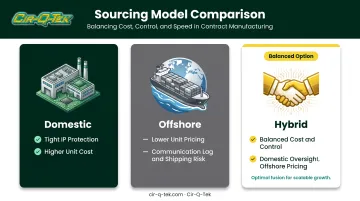
Geographic model matters too:
- A pure-domestic shop protects IP tightly but costs more
- A pure-offshore vendor cuts price but adds communication lag and shipping risk
- Hybrid models split that difference, worth weighing against your project's IP sensitivity and lead-time pressure
Conclusion
There's no universal "best" PCB assembly manufacturer. The right fit depends on matching certifications, capacity, and pricing model to your specific operational goals. A defense contractor and a consumer electronics startup won't pick the same partner.
Before signing on, evaluate ongoing quality performance, scalability from prototype to volume, and total cost of ownership rather than a quoted unit price alone.
If you're weighing a hybrid approach, Cir-Q-Tek offers ISO-certified PCB, PCBA, and precision CNC manufacturing through its Bristol, PA and Shenzhen offices: domestic service quality at offshore pricing, without juggling multiple vendors.
Frequently Asked Questions
Which type of PCB board is best?
It depends on the application. Rigid FR-4 works for standard consumer and industrial electronics, HDI suits compact high-density devices, and flex/rigid-flex fits designs with moving parts or tight space constraints.
What is the difference between PCB manufacturing and PCB assembly?
PCB manufacturing (fabrication) creates the bare board itself. PCB assembly (PCBA) populates that board with electronic components using SMT or THT processes.
How do I choose a reliable PCB assembly manufacturer?
Check for relevant certifications, inline AOI/X-ray inspection capability, minimum order flexibility, and a documented on-time delivery track record. Ask for references from similar programs.
What certifications should a top PCB assembly manufacturer have?
Look for ISO 9001 for general quality management, ISO 13485 if you're in medical devices, IATF 16949 for automotive programs, and UL/cUL approval for safety compliance.
How much does PCB assembly cost for small vs. high-volume orders?
Small prototype runs carry higher per-unit costs due to setup fees, while high-volume orders benefit from economies of scale. Hybrid offshore-domestic models can narrow that gap without sacrificing quality oversight.
What is the typical turnaround time for PCB assembly prototypes?
Quick-turn prototype fabrication can ship in as little as 3-5 days from qualified manufacturers. Full PCBA turnaround depends on component availability, complexity, and inspection requirements, so always confirm timelines during quoting.