Every one of those cycles eats into your time-to-market advantage. Competitors ship. Investors ask questions. And the design flaw you just found? It would have cost far less to catch it earlier.
PCB Assembly Express services exist to fix exactly this problem. Instead of standard multi-week turnarounds, express PCBA compresses fabrication and assembly into a few days, without skipping the inspection steps that catch defects before they become customer complaints.
This article breaks down what express PCBA actually means, why speed changes your development math, the advantages worth paying for, how to vet a manufacturing partner, and how to place your first order.
Key Takeaways
- Express PCBA shrinks multi-week lead times to as little as 3-5 days for build and ship
- Catching design flaws at prototype stage costs far less than fixing them in production
- ISO 9001, ISO 13485, or IATF 16949 partners deliver speed without dropping compliance
- Dual-location manufacturing models pair domestic communication with offshore pricing
- Inline AOI and X-ray keep express orders at production-level quality on a faster schedule
What Is PCB Assembly Express?
PCB Assembly Express is an accelerated PCBA service built for quick-turn prototypes and low-volume runs, not mass production. It compresses two normally separate processes into one managed workflow:
- PCB fabrication - producing the bare board (copper layers, drilling, solder mask, silkscreen)
- Assembly - sourcing components, placing them, and soldering them onto that board
Rather than shipping a bare board to one vendor and components to another, an express provider runs both under a single roof and a single schedule.
Turnaround varies significantly by provider. Some quick-turn assembly houses publish tiers ranging from 24 hours up to 10 days, depending on board complexity and whether all materials have arrived.
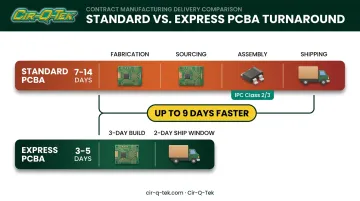
Cir-Q-Tek's benchmark for pre-production and prototype samples is 3 days to build and 2 days to ship to your dock, roughly a 5-day total window for sample and small-batch runs.
Expect to pay a premium for that speed. Priority scheduling and expedited component sourcing cost more than standard timelines, though the exact markup depends heavily on board complexity and quantity. A written quote, not a marketing number, is the only reliable way to know your real rush cost.
Express PCBA quantities typically run from single digits to a few hundred units. It's a prototype and small-batch tool, not a production strategy. Some providers, including Cir-Q-Tek, place no formal minimum order quantity on assembly runs at all.
Common Situations Where Express PCBA Is Used
- New product development - validating a design concept with a working board before committing further resources
- Small-batch functional testing - confirming performance before scaling into a full production run
- Quick design revisions - fixing a bug or adding a customer-requested feature without restarting the whole cycle
Why Fast PCBA Prototyping Matters for Product Development
Speed isn't just convenient. It changes how many design iterations fit inside your development window. A team that gets prototypes back in 5 days instead of 14 can run two to three times as many test cycles before launch, and each cycle is a chance to catch something before it becomes expensive.
That "expensive" part isn't abstract. Siemens describes the cost of fixing a PCB design issue as roughly a ten-fold increase at each step from development to testing to full-scale production - a rule of thumb, not a fixed formula, but a useful one. Siemens' analysis of PCB new product introduction notes that fixes made after manufacturing has started waste far more time and material than the same fix caught earlier.
Named examples back this up. Electronic Design reported that Tempo's rapid-prototype PCBA factory turned a process that traditionally took weeks into days, with boards ready to ship in as little as 3 days, and batches of up to 250 boards prepared in 1-2 days.
That's not an industry average, it's one factory's benchmark. Still, it shows how far turnaround has compressed for teams that prioritize speed.
Fast prototyping also buys flexibility when plans shift:
- A competitor launches a feature you need to match
- A customer requests a late design change
- A component you designed around goes end-of-life
Teams stuck in a 10-14 day loop lose weeks reacting. Teams running on a 3-5 day cycle can absorb the change and keep moving.
Key Advantages of Express PCBA Prototyping
Speed is the main draw, and express PCBA also cuts vendor handoffs, order minimums, and capability gaps that slow prototype work.
- Faster build windows - 3-5 day build-and-ship cycles versus multi-week standard turns, with AOI and X-ray kept in the process
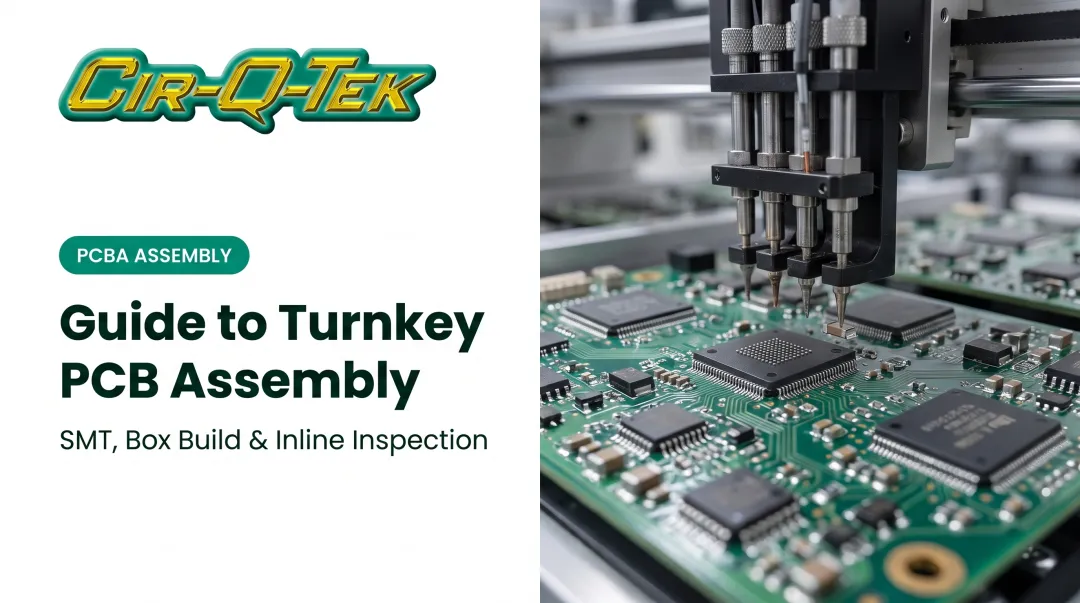
- One-stop convenience - component sourcing, SMT, through-hole assembly, and testing in one workflow instead of separate vendors
- Prototype-friendly order sizes - small runs that deliver working boards without a production-quantity commitment
- Fine-pitch capability - BGA, QFN, CSP, and 01005 components placed reliably even on compressed schedules
That last point separates real manufacturing partners from basic quick-turn shops. A 01005 passive component measures roughly 0.4mm by 0.2mm. Placing it reliably on a rushed schedule requires equipment most low-cost assemblers simply don't run.
Why Inspection Still Matters at Speed
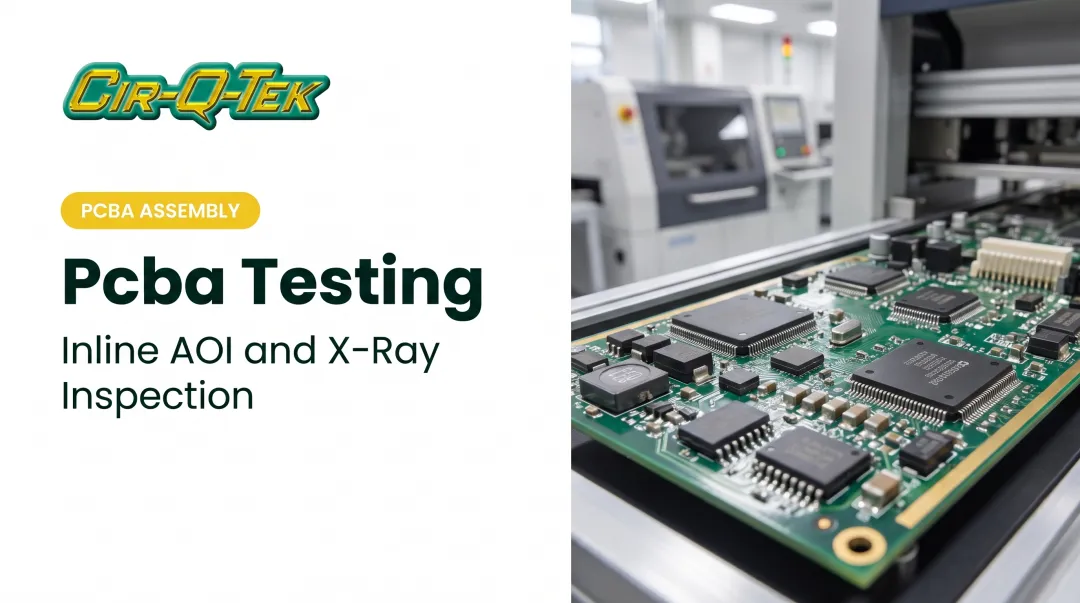
Faster shouldn't mean less scrutiny. Automated Optical Inspection checks solder joints and component placement visually, right on the line, after paste printing and reflow. X-ray inspection covers what AOI can't see, hidden joints under BGA and QFN packages where a visual check tells you nothing.
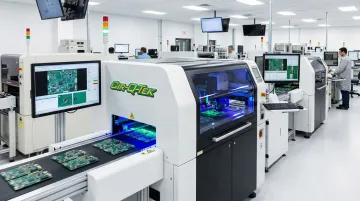
Cir-Q-Tek runs inline AOI and X-ray on every SMT line, handling BGA spacing down to 0.2mm alongside QFN, CSP, and 01005 parts. That combination makes express turnaround workable on complex boards, not only simple two-layer designs.
What to Look for in a PCB Assembly Express Partner
Not every "quick-turn" claim holds up once you place an order. Vet partners against these five criteria before committing your project.
| Criteria | What to check |
|---|---|
| Delivery speed | Actual build and ship windows in writing, not marketing copy |
| Quality assurance | ISO 9001 at minimum; ISO 13485 for medical, IATF 16949 for automotive |
| Supply chain strength | Ability to source hard-to-find parts or suggest alternates quickly |
| Cost transparency | Clear per-board pricing with no surprise rush or setup fees |
| Communication | Responsive engineering support that flags DFM issues early |
Certifications need to match your end market, not just exist. ISO 9001 covers general quality management for any sector. ISO 13485 specifically governs quality systems for medical device design, production, and suppliers.
IATF 16949 eligibility is restricted to organizations that manufacture, not just inspect or test, automotive products. A certificate name alone doesn't confirm scope, so ask which sites and product lines are actually covered.
Cir-Q-Tek checks these boxes directly. Prototype PCBs are built in 3 days and ship in 2, backed by ISO 9001:2015, ISO 13485, and IATF 16949 certifications, plus UL and cUL approval. SMT lines run inline AOI and X-ray inspection on every job, prototype or production.
The bilingual U.S.-Shenzhen office model means customer-facing staff in Pennsylvania and manufacturing coordination in China communicate directly, without the translation lag that slows down most offshore relationships.
On supply chain, Cir-Q-Tek's procurement team specializes in sourcing obsolete or hard-to-find parts and qualifying alternates when a component hits end-of-life mid-project. A diversified supplier base spanning China, Thailand, and Vietnam adds a buffer against regional disruptions.
How to Get Started With Your PCBA Prototype Order
Getting a working board back in days starts with getting your files right the first time.
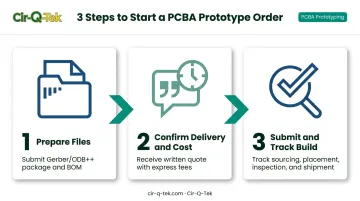
- Prepare your files - Gerber package or ODB++ plus a complete Bill of Materials. Include any special placement notes or assembly instructions your board requires.
- Confirm delivery time and total cost - Request a written quote covering board price, component sourcing, and any express fees before you submit so you avoid budget surprises mid-project.
- Submit and track the build - Sourcing, placement, soldering, and inspection happen under one workflow. Review AOI and X-ray results, then confirm the boards match your requirements before they ship.
A complete BOM matters more than most teams expect. Even challenging or long-lead components benefit from an experienced procurement team reviewing them early, rather than discovering a sourcing gap three days into the build.
Frequently Asked Questions
How much does PCB assembly cost?
Costs depend on board complexity, component count, order quantity, and turnaround speed. Express orders usually cost more than standard timelines. Request a quote for pricing specific to your board.
How long does PCB assembly take?
Standard PCBA often runs 7-14 days, while express services can deliver in as little as 3-5 days depending on board complexity and component availability. Cir-Q-Tek's prototype benchmark is 3 days to build plus 2 days to ship.
What does PCB assembly involve?
Core steps include component sourcing, solder paste application, SMT or through-hole placement, reflow soldering, and inspection and testing before shipment. Inline AOI and X-ray inspection catch defects during the process, not just at the end.
What files do I need to start an express PCB assembly order?
You'll need a Gerber package or ODB++ file and a complete Bill of Materials. Assembly drawings or placement notes help if your board has special requirements.
Can express PCB assembly handle complex components like BGA or fine-pitch parts?
Yes. SMT lines with inline AOI and X-ray inspection can handle BGA, QFN, and fine-pitch parts like 01005 even on accelerated schedules. Not every quick-turn shop has this equipment, so confirm before ordering.
Is express PCB assembly suitable for medical or automotive prototypes?
Yes, when the manufacturer holds certifications such as ISO 13485 for medical or IATF 16949 for automotive. Cir-Q-Tek holds both, and these standards apply at the prototype stage—not only in full production.